Five Things People Get Wrong About Buying in a New Community


Five Things People Get Wrong About Buying in a New Community
Buying in a new community can come with a lot of assumptions.
Some buyers hear one bad HOA story and decide every new community works the same way. Some assume new homes lose value the moment they close. Some believe customization is open until the day drywall goes up.
Most of those assumptions are incomplete.
New construction myths cost real buyers real money. Some buyers walk past communities that would have served them well because of stories they picked up at a barbecue or in an online forum. Five myths come up over and over. None hold up when you look closely.
Each one is addressed below with the honest version and how it plays out at a community like Serres Farm townhomes in Oregon City.
Buying in a New Community Myth 1: HOAs Are Always Restrictive and Never Worth the Fee
HOAs vary widely.
Some are heavy-handed and arbitrary. Some are light-touch and protective of property values. The reputation of “all HOAs” usually comes from the worst examples, not the typical ones.
A reasonable townhome HOA may cover exterior maintenance, landscaping, shared utilities, and certain insurance coverage. The fee offsets what you would otherwise spend on lawn care, exterior repairs, and roof replacement. For a buyer who values low-maintenance ownership, the net can be favorable.
The Forrest Ridge answer: Stephanie can walk you through the specifics of the HOA at any community you are considering. The structure varies by community, so this is a question worth asking before you sign. Use the Forrest Ridge contact page to start the conversation.
Buying in a New Community Myth 2: New Homes Lose Value the Moment You Close
This one comes from a misread of the car analogy.
People say a new home is like a new car: drive it off the lot and lose value. Homes do not behave like cars.
Most well-built new construction in a strong, supply-constrained market has a different value pattern. Location, build quality, design, inventory, interest rates, and buyer demand all matter more than the fact that the home is new.
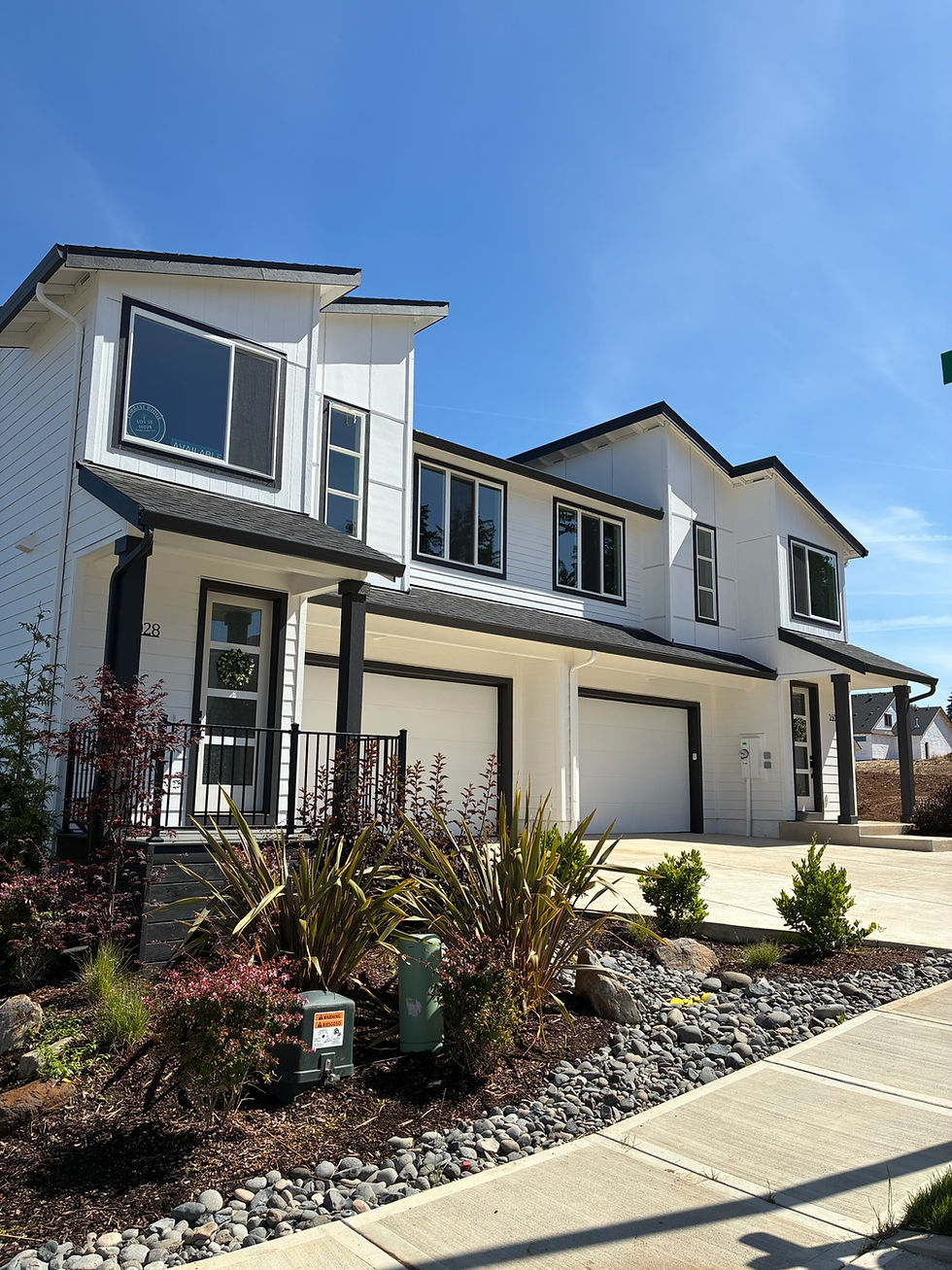
The Forrest Ridge answer: Serres Farm townhomes sits in Oregon City with a design standard that gives buyers something more specific than generic new construction. The homes are built around restrained design, livable layouts, and the kind of attention buyers expect from a serious Oregon builder.
If you want to understand the broader Forrest Ridge standard behind the community, start with the Forrest Ridge Homes homepage or learn more about the builder on the About page.
Buying in a New Community Myth 3: You Can Customize Anything Anytime
Customization is real, but it has cutoff dates.
Structural changes typically lock at contract or within two to three weeks. Design center selections, including flooring, cabinets, and countertops, usually lock four to six weeks before drywall. After that, changes either become impossible or carry real cost.
The Forrest Ridge answer: Customization windows close at predictable points in the build. Stephanie walks every buyer through which decisions need to land and when, so nothing slips.
If you are comparing layouts before a tour, start with the current Forrest Ridge floor plans. Then bring specific questions about which options are still available for the home or community you are considering.
Buying in a New Community Myth 4: Every Neighbor Is the Same Kind of Buyer
New communities attract a wider mix than buyers expect.
First-time owners, downsizers, right-sizers, multi-generational families, work-from-home professionals, and retirees may all be looking for the same thing: a home that does not require immediate renovation.
The shared trait is not a single demographic profile. It is a desire for a cleaner, lower-maintenance, better-planned home.
The Forrest Ridge answer: Serres Farm draws a mix that includes downsizers, right-sizers, and families using the side-by-side configuration for multi-generational living. For buyers who want something available sooner, the Move-In Ready page is also worth checking while comparing timing and availability.
Buying in a New Community Myth 5: School Zoning Is Locked in Forever Once You Buy
School zoning can change.
District boundaries can be redrawn. New schools can open. Specialty programs, charter options, transfer rules, and district policies can shift the picture over time. The school assignment for a home today is the starting point, not the end of the story.
The Forrest Ridge answer: For Oregon City and Woodburn, school district information should always be verified directly through the relevant district before you make a decision. This is not a reason to avoid buying in a new community. It is a reason to ask better questions and verify the details that matter to your household.
For buyers tracking future Woodburn opportunities, the Mill Creek Meadows Woodburn page is the right place to understand how Forrest Ridge is approaching that community.
How to Use These Five Myths
When you hear one of these myths at a barbecue, you can either nod and move on or you can know better.
Knowing better tends to lead to better houses.
If you are seriously buying in a new community, bring these questions to your next tour. Ask about the HOA. Ask about customization deadlines. Ask what is standard and what is upgrade. Ask how the neighborhood is taking shape. Ask where to verify school information before you rely on it.
A thoughtful builder will not avoid those questions.
Stephanie can walk you through the Forrest Ridge answer for Serres Farm, Woodburn, and any available home you are considering. Start through the Forrest Ridge Homes contact page to schedule a conversation or walkthrough.
FAQ
Is buying in a new community a good idea?
Buying in a new community can be a good idea if you value newer construction, lower-maintenance ownership, warranty coverage, modern layouts, and the chance to make some design choices early in the process. The key is understanding the HOA, timing, customization windows, and neighborhood plan before you sign.
Are HOAs always bad?
No. HOAs vary widely. A reasonable townhome HOA may cover exterior maintenance, landscaping, shared utilities, and certain insurance coverage, which can offset what you would otherwise spend yourself. The reputation of “all HOAs” usually comes from the worst examples.
Do new homes lose value right after closing?
Not automatically. Homes do not behave like cars. Value depends on market conditions, location, construction quality, design, inventory, and buyer demand. In strong markets, well-built new construction can hold or gain value over time.
Can I customize a new home anytime during construction?
No. Customization windows close on a schedule. Structural changes usually lock at or near contract, while design center selections typically lock before drywall. Knowing the cutoffs is essential.
Who buys homes in a new community like Serres Farm?
A wider mix than many buyers expect. Serres Farm can appeal to downsizers, right-sizers, multi-generational families, work-from-home professionals, and buyers who want a newer home without immediate renovation work.
Is school zoning permanent once I buy?
No. School zoning can change. Buyers should verify current school assignments directly with the relevant district before making a purchase decision.


Comments